Vietnam’s manufacturing base, infrastructure pipeline and position inside ASEAN’s integrated production networks are creating practical reasons for tube, pipe and processing-technology buyers to meet suppliers in Hanoi.
A Regional Market Built Around Connected Production
ASEAN is not one uniform purchasing market. Its member economies have different industrial strengths, project cycles and technical standards. What connects them is an increasingly integrated production system. The ASEAN Trade in Goods Agreement provides the framework for freer regional trade, while ASEAN’s investment reports highlight deeper supply-chain links among multinational companies, regional manufacturers and local suppliers.
This matters to tube and pipe suppliers because production networks require more than finished steel. They depend on process equipment, stainless and carbon steel tubes, fittings, valves, welding systems, inspection tools, automation, logistics and reliable technical support.
Why Vietnam Matters Inside the Network
Vietnam combines export-oriented manufacturing with continuing investment in factories, transport, energy and urban infrastructure. Vietnam’s Ministry of Planning and Investment reported that processing and manufacturing attracted the largest share of registered foreign investment in 2024. The National Statistics Office later reported strong growth in processing and manufacturing during 2025.
The commercial implication: expansion in manufacturing and infrastructure can increase the range of factories, contractors and supporting-industry companies that need to specify, source, install, maintain and upgrade tube, pipe and processing systems.
The World Bank also identifies an important next step for Vietnam: strengthening connections between export-oriented foreign companies and domestic suppliers. That gap creates room for technical suppliers that can offer consistent quality, documentation, local support and solutions suited to specific applications.
Where Tube and Pipe Procurement Conversations Begin
- Manufacturing plants: process piping, stainless systems, structural tubes, fittings, valves, welding and maintenance solutions.
- Infrastructure and construction: steel tubes, water and utility systems, structural applications and project-oriented supply.
- Energy and environmental systems: corrosion-resistant materials, pressure components, inspection, joining and fluid-control technologies.
- Distributors and fabricators: reliable stock, product range, certification, lead time, machining and customization capability.
These categories describe likely sourcing conversations; requirements still vary by project, regulation, end use and buyer. Suppliers should prepare technical standards, certificates, application references, delivery terms and after-sales support information rather than relying only on general product brochures.
Why Meet in Vietnam
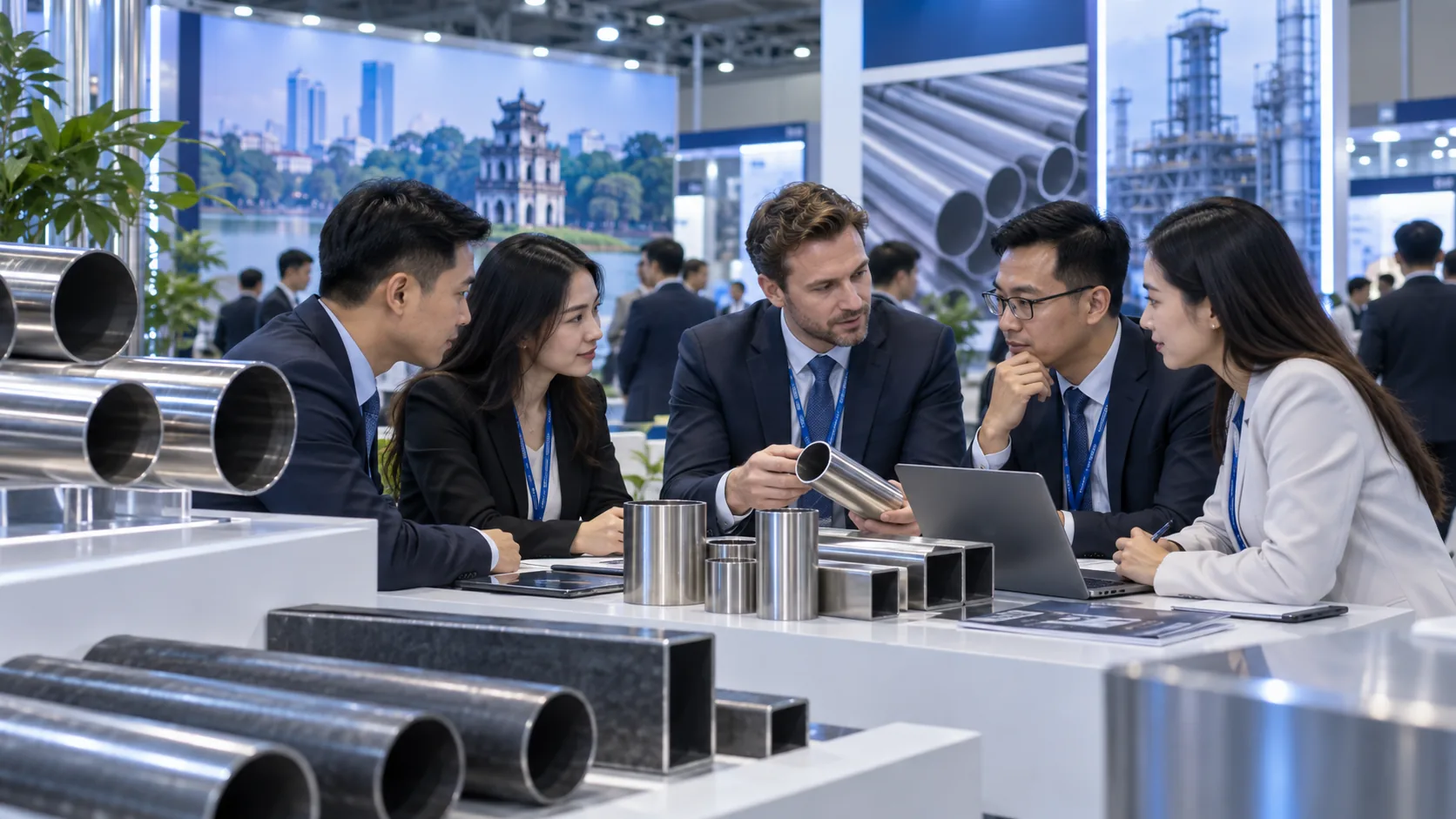
A focused trade exhibition gives international suppliers a practical setting to compare market needs across buyer groups. TPSV2026 is designed to support conversations with Vietnamese manufacturers and distributors while helping international participants explore opportunities connected to wider ASEAN supply chains.
- Distributors can evaluate product range, pricing structure, stock strategy and territory support.
- Manufacturers and fabricators can discuss materials, tolerances, production technology and quality control.
- Engineering contractors can compare specifications, compliance documents and project delivery capability.
- Project buyers can identify suppliers for current requirements and future vendor lists.
How Suppliers Should Prepare
Before the show, define the applications and buyer profiles that matter most. Prepare a short company introduction, clear product images, certificates, relevant project references and a concise explanation of what differentiates the offer. Confirm who can answer technical and commercial questions at the booth.
For buyers, prepare a sourcing brief covering material grade, dimensions, standards, application, required quantity, delivery schedule and certification. Specific information makes meetings more productive and helps suppliers recommend realistic solutions.
From Regional Interest to Qualified Meetings
Vietnam’s role in ASEAN does not guarantee an order, and a trade show does not replace technical qualification. Its value is that it concentrates relevant suppliers, buyers and market information in one place—making it easier to identify fit, compare capability and plan follow-up discussions.
Sources and Method
Market context was checked against the ASEAN Investment Report 2025, Invest ASEAN manufacturing overview, ASEAN Trade in Goods overview, Vietnam MPI 2024 FDI report, Vietnam 2025 socio-economic report, and the World Bank’s Viet Nam 2045: Trading Up in a Changing World. Procurement implications are editorial inferences from these sources and the event’s industry scope.
Book a Booth · Register to Visit · Browse Exhibitors · Request Meeting Support